Monday, October 20, 2014

More than good enough

The other day I got into my car to see a large crack in the windshield, spreading from the bottom up toward the center. The crack had not been there the day before, but it was clear that it would soon take over the windshield, spreading as far as it could across the glass like an angry scar. I remembered the rock that had been kicked up into our windshield by a passing vehicle a few days before. I'd forgotten to check the windshield for damage, and now it was too late. 

That crack is a visual reminder for me, strangely fitting for the condition of my life lately. Some of the dings and dents I've been ignoring are starting to spread. The rocks kicked up into my life became wounds I did nothing about, and all my heart needed was a cold day for the cracks to start.

I'm learning some things the hard way, it seems. Some loving friends have shown me that I am a peacekeeper. This is not a good thing.

A little research taught me this: "A peacekeeper always guides conversations away from the subjects that might cause strife. Peacekeepers are compromisers. They avoid confrontation at all costs. They are experts at changing the subject, preventing arguments and misdirecting the conversation. The peace achieved by a peacekeeper is a pretend peace, it is a momentary peace. This peace is outward, external and incapable of changing anyone’s heart or mind." 

Well who am I to try to change anyone's heart or mind? Shouldn't I just accept my lot and let God do the rest? 

Not always, it would seem. This is what I am learning.

A peacekeeper is not to be confused with a peacemaker

"Peacemakers invite necessary conflict because they know there is no other pathway to the increase of understanding between warring people and groups. Peacemakers value authentic peace more than its distorted parody. The peace that exists between people with the courage to endure conflict, for the sake of lasting peace, is like gold when compared to its counterfeit cousin (peacekeeping)."

I'm a little lost and confused about all of this right now, but I suppose a lifetime of peacekeeping is not turned around quickly. I still long for the "gentle and quiet spirit" which is "precious in the sight of God." But I also want to be the peacemaker who is salt and light (Matthew 5).

"[Salt] prevents spoilage by preventing decay by bacteria, fungi, etc. Ultraviolet light also kills bacteria. Salt and light are confrontational with their environment because both prevent decay."

I had accepted some things in my life as crosses I needed to bear in silence. We were getting along, and things were good enough. I could live with it, I thought. But my acceptance allowed the decay to begin.

I thought I was doing the right thing. But the peace was momentary, and now the cracks are spreading, and I must have "the courage to endure conflict, for the sake of lasting peace." This relationship is dear to me, and now I see I hurt both myself and the other person by my inaction. I was not helping either of us by allowing the wounds to fester.

"Peacemakers lead others to have peace with God." If the peace I am guarding is only between myself and the other person and is not peace with God, I am a peacekeeper, not a peacemaker. 

Now I wonder if in all my prayers for healing, God was trying to tell me that the healing had to start with my being courageous."Truth without love is harsh, but love without truth is compromise." Sometimes we pray for answers when WE OURSELVES are the answer. 

So I'm working on this idea of peacemaking, stepping out in love and confronting the cracks. I won't say it doesn't hurt. But at the same time, I have hope. I'm seeing that God doesn't want us to live with good enough. He wants to heal, wants us to be whole. And if I can let go and trust Him, He will take us there.


Tuesday, September 9, 2014

Too much growth can kill you

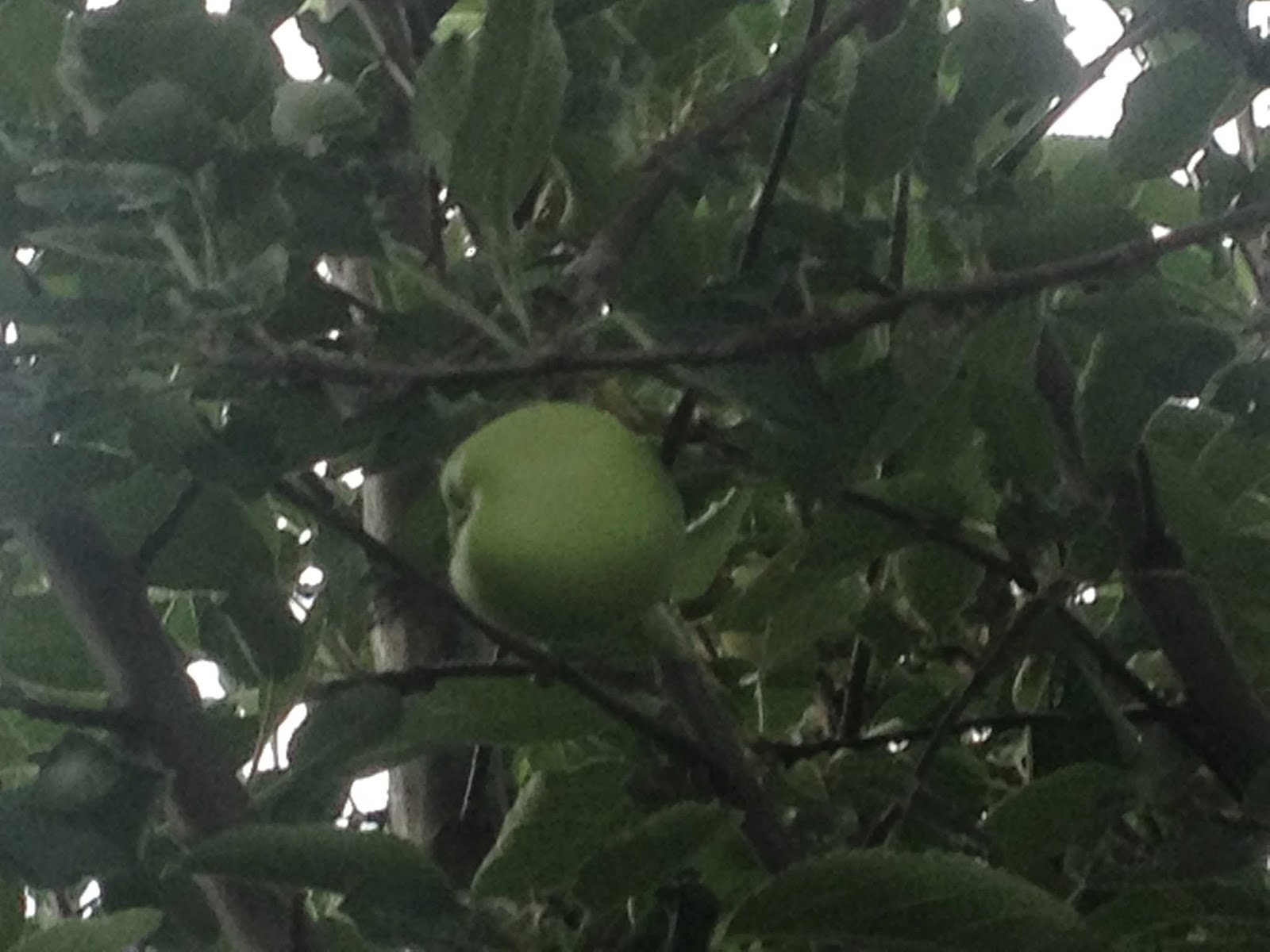
We have four apple trees in our backyard. Years ago they produced a bounty of red, but this year I can count the number of apples on one hand. At least this year there ARE a few apples. We didn't know anything about apple trees when we moved here, and so we didn't know about pruning. When we did finally prune the trees, we cut them back too far, and I feared we had killed them. They didn't bear fruit after that. So I quit pruning them altogether.

This year the trees grew with a vengeance, and in the spring the branches were laden with promising white flowers. But the apples never came. And when I looked through the tangle of branches to the center of the trunk, I saw that the trees were dying inside. While the outside of the tree was heavy with green growth, the center was becoming brown and dead, and the branches couldn't get the food they needed.

I see now why pruning is necessary. I let the trees have too much of a good thing, and now there are so many branches that the center of the tree cannot get the light or nourishment it needs. With all those branches to feed, bearing fruit is almost impossible. I must prune the trees regularly and make sure I cut away just enough but not too much. And sometimes that means cutting away the good branches to let the light in. Too many good branches means not enough fruit.

I am amazed at how God keeps using those trees to show me my life. This time last year I was emerging from a season of craziness and chaos and too-much-ness, and I spent 31 days writing about abiding. That was a season of pruning followed by so much growth. And yet now here I am again, emerging from another summer just like the previous one, with so many branches I am trying to feed that I sometimes feel like I am dying in the center. I can take on so many things and make it look from the outside that I am thriving, but at my core I am starved for sunlight. And I don't have what it takes to truly bear fruit. 

Thank goodness for a Gardner who knows just what to do when the tree will let Him. Sometimes the pruning is the cutting away of dead things. But sometimes the pruning is cutting back the tangled mess of growth to allow the good things to thrive. To keep me from choking and dying from the inside out. 


And we have the choice to come to Him or not, because we are more than just trees; we are His beloved. I find myself back at this lesson on abiding all over again, and that's OK, because I want to remember how to rest. How to be still. How to be filled with His love instead of with my own drive to constantly do, to find my significance in things that only choke the life away. 

I can rest because I can believe

He is good. Always. And coming back to Him always reminds me that I am right where I want to be. I just have to stay there.


Monday, June 30, 2014

What's your giant?

1 Samuel 17

It all started when they wanted a king. 

Even though God had always been more than enough for them. 

Even though his love had opened seas and split rocks and rained bread from heaven, even though he had led them across the desert, toppled the walls of their enemies, even kept their shoes and clothes from wearing out along the way. 

Maybe the parents had stopped telling the stories. Maybe the children had stopped listening. Whatever the case, God's people looked at the people around them and said, "We want what they have. We want to be like them." 

And when at their insistence God gave them a king, the king did what kings almost always do because they are just like the rest of us. 

He stopped looking at God. 

When the people stopped looking at God and started looking at the king, as long as the king was looking at God, things were sort of OK. Not the best they could be, of course. But OK.

But enemies rose up all around, as enemies do when they sense easy prey. And the king looked at the enemies, and the people looked at the king, and all of them were afraid. Then the stories of old seemed like just that--stories--and it's hard to act upon a story when you are staring a real-life enemy right in the face. 

I don't want to admit that I am just like that king and just like those people who quaked in their tents at the battle line drawn up right across the valley from the enemy. 

There they sat day after day as the giant stepped forward with his terrible, towering, armor-clad, muscular splendor, a smirk on his huge face. "I defy you!" he would cry, and then he would just wait for someone to finally step forward.

But the people fled in terror. For forty days. 

For forty days their lives stood still, held captive by fear and by a giant that was too strong for them. For forty days they stared at that giant and at the long row of enemy tents, and each day the victory seemed more impossible. Each day they gave up just a little more, and soon that giant would get what he wanted. Surrender.

You know the story. Along comes this boy, ruddy, fresh from the fields, cheerfully strolling into this camp of despair. His older brothers fill him in on the situation and he is dumbfounded. I love his incredulous question: "Who is this uncircumcised Philistine that he should defy the armies of the living God?" 

The men in the camp say the situation is impossible. His brothers accuse him of cockiness and trying to get attention. Saul tells him he is too young. But in the end these desperate warriors send young David armor-less to stand before Goliath. 

There must have been something about him that gave them hope. It had to be more than just his bold words. Maybe a look in his eye, an easy confidence. A peace.

People who are with God a lot are like that. People who know their God and remember his faithfulness don't have to look at the giant. They are already looking at something much bigger. 

David kept a record of God's power. Just read the psalms. When questioned by Saul, he said, "Your servant has killed both the lion and the bear; this uncircumcised Philistine will be like one of them, because he has defied the armies of the living God. The Lord who rescued me from the paw of the lion and the paw of the bear will rescue me from the hand of this Philistine.”

And when Saul gave David his own armor and sword and David laid those down, I can't help thinking it was a way of letting go of all control. After all, the victory wouldn't have been nearly as spectacular if David had been wielding a sword. He faced that giant with a stone and a sling, knowing the power was all God's.


David's words to Goliath are worth remembering:

David said to the Philistine, “You come against me with sword and spear and javelin, but I come against you in the name of the Lord Almighty, the God of the armies of Israel, whom you have defied. This day the Lord will deliver you into my hands, and I’ll strike you down and cut off your head. This very day I will give the carcasses of the Philistine army to the birds and the wild animals, and the whole world will know that there is a God in Israel. All those gathered here will know that it is not by sword or spear that the Lord saves; for the battle is the Lord’s, and he will give all of you into our hands.”

God does not save by sword or spear. He doesn't need them. And whatever you think you need to defeat your giant? He doesn't need that either. 

David was as confident in God's love as he was God's power. He knew not only that God could do it, but that God would do it because God loved him. 

Maybe we need to stop staring at the giants and start remembering. Maybe we need to quit listening to the voices around us and be with our God instead. Maybe we need to let go of the sword, step up to the battle line, and watch God work. 

Tuesday, May 13, 2014

Snow in spring

Sometimes it snows in May.

Just when you are starting to think warm thoughts, pull out the shorts and t-shirts, and plan your summer adventures. Just when you are thinking the long, cold winter is finally at an end—you can throw open the windows and breathe deep.

Suddenly you find yourself huddled in front of the woodstove—again—on a gloomy May day, watching snow—SNOW, for Pete’s sake!—cover the new buds on your apple trees.

It may be hard not to be grumpy.

It might be difficult to keep from whining.

You might have to refrain from marching right out and chucking a snowball at the nearest child frolicking in the sinful stuff.

But then your daughter tugs at your hand and says, “Doesn’t it smell good, Mom?” And the sun breaks through the clouds, and you hear the dripping from the trees and the birdsong rising through the cold air, and you see the vivid green poking up through white, and you remember.

Spring always comes. Life always follows death.

And sometimes the things that mean cold darkness today will mean lush new growth tomorrow.

Sometimes the brightest spring emerges from the darkest winter.

Today this snow reminds me of the God whose ways are much higher than mine, whose thoughts are not my thoughts. He tells me:

“As the rain and the snow
    come down from heaven,
and do not return to it
    without watering the earth
and making it bud and flourish,
    so that it yields seed for the sower and bread for the eater,
so is my word that goes out from my mouth:
    It will not return to me empty,
but will accomplish what I desire
    and achieve the purpose for which I sent it.
You will go out in joy    and be led forth in peace;
the mountains and hills
    will burst into song before you,
and all the trees of the field
    will clap their hands.” (Isaiah 55:10-12)

If I stop and still my heart, releasing my expectations, I can see the beauty. And I can almost hear the mountains singing.

Sunday, May 11, 2014

To my mom: now I can say thank you

Reflections


When I pushed
you open
that cold night
demanding
to be released into the world,
the tearing of your flesh
was but the first pain of letting go.

No one told you
how that opening
wide of motherhood
would empty you out
and fill you
all at once.

Maybe you had imagined
cries in the dark at midnight
toy explosions
sibling wars
and the endless thankless art
of making a home,

But you didn’t know
how the letting go
would begin first with
yourself.

The pouring out was
effortless some days,
kisses lavished, songs sung,
joy thick as the laughter
that embraced you,
a child’s bright smile
easy reward
for invisibility.

Other days
I sucked it from you,
heedless of weariness,
unaware of your soul
that extended so far beyond
my small imaginings.

Did you ever long to be
seen?
Did you wonder when I
would really
know you?

Still
you stepped cheerfully
into the humble role
I cast for you,
and even as
you wove a world around me
hemming me in,
you made holes
to let the light in,
a space to breathe
and dream.

So many things I took
from you,
my child’s heart never knowing
who you really were,
the woman who labored
and loved long beyond
her own strength,
who made herself small
to give me the universe.


Thursday, May 1, 2014

This rock (Revolution of Jesus, Part 3)

Silent.

After all that has happened, this is the worst. The finality of this silence. The earth has simply swallowed up your hope. Everything you thought you were living for is now sealed in stone. Dead.

And nothing matters now but that look.

After all your bold words about following Jesus to the ends of the earth. You couldn't even own Him to a simple servant girl. You lied. Three times. You denied the one thing that you have ever been sure of. All those years of following Him. All your hopes. You were going to lead the way.

"I don't know Him." The grief of those words crushes your heart. I failed Him. I hurt Him. And I can never take it back.

The world has closed silent around those last words, and you must carry the knowledge of His eyes on you, burning into your heart.

Maybe you thought He couldn't hear you? That He wouldn't know?

But then He turned, and His eyes found you, and they brimmed with the sorrow of your denial. They pierced you with the knowledge of your failure.

But the sorrow in those eyes was all for you. The knowledge was for the burden you now bear.

You can still feel His hands holding your feet, staying your sword. You can hear His voice filled with agony, asking you to pray with Him.

And really, what have you done but fail this Lord again and again, with Your bumbling words, your impulsive zeal? And what did He ever do but gently say, "Not this way. Follow Me."

The truth is that revolutions always ultimately fail. You may rise up and act, you may work for a worthy goal, and you may even succeed for a time in throwing off the old and bringing in the new. But  in the end we cannot escape ourselves. We always wreck everything in spite of our best intentions.

We all stand in the loud silence of our sorrow and sob, "What have I done?"

We all must look aghast at who we really are and stop pretending.

You may even know beyond doubt that Jesus defeated death. You may have heard the angels, seen the grave clothes lying empty. But for you--your revolution has failed.

You failed Him.

You failed yourself.

And so you return to what you know. To life before the revolution. Even though you swore you would never go back. Even though you work all night and catch nothing--another failure. This is what you know. This is who you are.

And then you hear a familiar voice telling you to do something familiarly ridiculous, like, "Throw your net out again." Even though you already threw it hundreds of times and came up empty.

And as you haul in the net that is already breaking under the strain of so many fish, your mind flashes back to another moment exactly like this one, the moment your life truly began. The moment hope was born.

It is the Lord.

And you know it's silly to hope after all you have done, but you cannot help it--you leap into the water and splutter and splash gracelessly to the shore where you fall at His feet.

He raises you up. He feeds you. Just like all the other times, when you think He should be arming you for battle, He feeds you.

He looks into your eyes, and His own are filled with the sorrow of your suffering.

"Do you love Me?"

Three times. Once for every denial.

And  you choke out your love for Him and this time your words are not bold and fiery and confident. They are broken.

This is the rock He will build on. This broken thing, who understands shame. And failure. And regret.

Because really, how can you understand hope unless you have been hopeless? How can you tell the world of the grace He offers unless you have first known despair?

"Feed My sheep."


This is a revolution of hope. A revolution that will save us from ourselves. A revolution that never stops, because we we never stop denying Him, and He never stops restoring.

Because what we really need--what all of us need--is not the overthrow of kings or armies. Not the accumulation of things. Not the success that still leaves us empty.

We are hungry. We need to be fed.


Friday, April 18, 2014

It doesn't begin where you think (Revolution of Jesus, Part 2)

"Look how the whole world has gone after Him!"

The Pharisees fumed in their fear while the people flocked after Jesus, thirsty for a sign. They wanted to be fed. They wanted to be healed. They wanted to be free. 

And here was Jesus, doing the impossible. Raising the dead. Clearing the temple. Saying these preposterous things that made people want to hope. 

Revolution. 

But then. 

A sacred night. A quiet upper room. These friends who thought they knew their Jesus, who thought they were ready to follow Him into death. 

That night it really began. That night Jesus started the revolution that would one day catch fire across the world. 

He knelt at the feet of His friends. His followers. These beloved yet frail and faltering feet. And one by one, He washed them. Touched them in the place of greatest outward shame. Held the mess of them, the flesh stinking with the filth and grime and weariness of earth. 

One by one. Purposefully cleansing. Looking into their eyes. I see you.

And then Peter, the one who had confessed his teacher as Lord, the one who knew he was serving his Messiah. Peter, whose heart burned with righteous fire, who above all things wanted to do. To act.

"You shall never wash my feet." 

Did he say this because he knew it was very God about to do this thing? Did he say this from deep humility? Or was it something else?

"Unless I wash you, you have no part of Me."

Jesus knew that place of deepest pride, the place so hard to reach because it looks like humility. The place that says, I will gladly serve, but I will never be served. I will give all, but I will never receive. 

We focus, rightly, of course, on the selfless act of Jesus in the most humble act of service. We hear His words, "Do as I have done for you." 

Maybe this is where revolution begins. 


But maybe, for some of us, it begins in Peter's place. It begins when someone kneels before us and enters our mess, takes our grime in their hands and says, "Let me help. Let me love you."

Aren't we Jesus-followers often so good at giving? So intent on serving? But can we receive? Can we be served in return?

"Wash one another's feet," He said. "Unless I wash you, you have no part of Me."

You, Peter, so ready to go, to do, to lead the way for Me, you will not know the way until you sit here and lift up your mess. Until know your need to be touched, served, cleansed, and until you allow others in, You will have no part of Me.

This revolution began not with going, conquering, demanding, taking, but with sitting, kneeling, serving and being served. 

This Jesus, he knelt and served. But only a few moments later, He opened His own soul, full of agony, fear, and despair, to His dearest friends. "Pray with Me," he begged them. He invited them into His struggle. He asked them to serve Him. He allowed Himself to need. Even when they kept falling asleep, He kept asking. Be with Me.

I would rather wash a thousand feet and keep my own twisted toes safely tucked inside my shoes. But  when I sit and let someone kneel before me, touching me in a place of great need, I feel my soul open. I see my shame and my sorrow. I am exposed. But here is where hope and grace can enter in. Here, at the place of giving and receiving, is where revolution begins.

Thursday, April 10, 2014

What this spring should really be about (Revolution of Jesus, Part 1)

These days I cringe when I open my front door. I’m waiting for that icy blast of
wind that has kept us captive inside for far too many months. Is it just me, or has this winter has seemed harsher, colder, and longer than most?

I’m ready for summer. And for windless days. But for now there is the sunshine flooding the window with light. There are the fuzzy buds blowing around on the branches outside, and there is this green grass poking up stubbornly through the snow that keeps falling on it.

Spring is a patient but demanding master. It always comes. Life keeps springing up out of the dead things.  Each year the world undergoes a mini-mutiny as it throws off winter’s grip and claims the sunshine.

As Easter approaches, I’m contemplating this life of Jesus, particularly in His final days before His death. And to my surprise, one word keeps coming to my mind.

Revolution.

It’s easy to see why the Jewish leaders were afraid of revolution. Jesus was a common man who became a great leader and teacher. He stirred the crowds with His humility, compassion, and fearless stand against the religious oppressors. He came to a people downcast, captive, and trodden upon.

And on top of that, He healed diseases. He opened blind eyes and deaf ears. He fed thousands. He raised the dead. He met the people at their most basic needs, needs long overlooked by their spiritual and political rulers.

He gave people hope.

And hope makes a people bold. It awakens them, like a world thawing into spring. It stirs them to act.

While the Romans and the Jewish leaders controlled them with rules and force of law, Jesus saw them. Heard them.

When He stood before that tomb of his friend and wept with sorrow, He was one of them. When He called the dead man out and restored him to his sisters, He was God.

Here was God come down into the captivity of His people, walking in it and even grieving it with them—and showing them a way out.

And suddenly life was stirring in the hearts of these people long used to facing death. And they began to think their days could be about more than survival.

The religious rulers were happy with what they had. They loved what they had. They were perfectly comfortable in their captivity. “If we let Him go on like this,” they said, “everyone will believe in Him, and then the Romans will come and take away both our temple and our nation” (John 11:48). The religious leaders were furious because they were afraid.

They were right to fear a revolution. They were wrong to think that they could silence it. For although no one yet understood what it was, Jesus was about to instigate an uprising. This revolt would have nothing to do with overthrowing a government or political system. It would have everything to do with overthrowing the heart.

And when the human heart is overthrown, death only opens the door to life.

Jesus awakened people by loving them. He showed that real revolution begins not by demanding our rights but by letting go of them for the sake of others. He led the way not in taking up arms, but in laying down His life.

After all, the only way to get to spring is to go through winter. And the only way to find out who we really are is to lay down everything we thought we were. Our true life will come from our dead things, just as revolution comes when we allow hope into our deepest need.

During these next few weeks I hope to explore this revolution of Jesus. And I hope it will catch fire in my own heart.